The Serengeti Great Migration: Nature’s Greatest Wildlife Spectacle
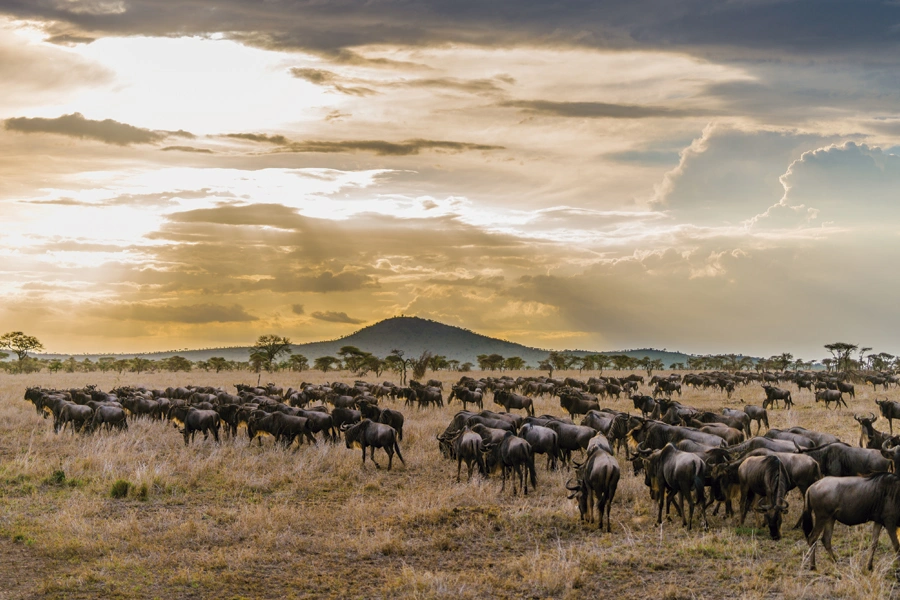
Every year, over a million wildebeest, hundreds of thousands of zebras, and countless gazelles traverse the endless plains of Tanzania and Kenya in one of nature’s most breathtaking spectacles: the Serengeti Great Migration. From thundering hooves across dusty savannahs to heart-stopping river crossings, this is more than wildlife—it’s a story of survival, instinct, and the rhythm of life itself.
Picture standing on the edge of the Mara River at sunrise, the air thick with dust, hooves pounding, as the first wildebeest appear over the horizon. This is the heartbeat of the Serengeti.
What Is the Serengeti Great Migration?
The Serengeti Great Migration is the annual movement of over 1.5 million wildebeest, accompanied by hundreds of thousands of zebras and gazelles. Driven by seasonal rainfall, these animals follow a clockwise route across the Serengeti ecosystem in search of fresh grass and water.
Animals on the Move
- Wildebeest: The stars of the migration, numbering over a million.
- Zebras: Often move alongside wildebeest, adding contrast to the golden plains.
- Gazelles: Small but nimble, they join opportunistically.
- Predators: Lions, cheetahs, hyenas, and crocodiles trail the herds, creating a dynamic, high-stakes drama.
Why They Migrate
Rainfall dictates grazing availability. The cycle moves herds through:
- Southern Serengeti (Jan–Mar): Calving season for newborns.
- Western Corridor (Apr–Jun): Short grass plains and plentiful water.
- Northern Serengeti & Mara River (Jul–Oct): Famous river crossings in dry season.
The journey spans ~1,800 miles, facing natural obstacles and predators along the way—a true testament to nature’s choreography.
Migration Timeline – When to Witness It
| Month | Location | Highlight |
|---|---|---|
| Jan–Mar | Southern Serengeti | Calving season, newborn wildebeest |
| Apr–Jun | Western Serengeti | Lush grazing, predator sightings |
| Jul–Oct | Northern Serengeti & Mara River | Dramatic river crossings |
| Nov–Dec | Southern Serengeti | Herds return south, completing the cycle |
Pro Tip: For photography, July–October is perfect for river crossings, while Jan–Mar offers intimate calving and predator interactions.
Top Migration Hotspots
- Mara River: Iconic river crossings, home to crocodile encounters.
- Central Serengeti: Ideal for large herds and predator interactions.
- Southern Serengeti: Calving grounds for newborn wildebeest.
- Northern Serengeti: Dry season grazing, great for accessible safari drives.
- Maasai Mara (Kenya): The cross-border extension for dramatic action shots.
Tip: Each area provides a unique perspective of the migration, from tense river crossings to peaceful grazing.
Planning Your Serengeti Great Migration Safari
- Duration: Minimum 5–7 days to witness multiple stages.
- Vehicles: 4×4 safari vehicles with pop-up roofs for optimal photography.
- Guides: Experienced guides predict herd movements and river crossings.
- Cost: Luxury: $600–$1,200/day, Mid-range: $300–$500/day.
Imagine watching the first herd appear over the horizon at sunrise—nature’s largest migration unfolds before your eyes.
Photography & Experiencing the Migration
- Gear: Telephoto lenses (200–400mm) for predators; wide-angle lenses (16–35mm) for sweeping herd landscapes.
- Best Light: Early morning or late afternoon for golden light.
- River Crossings: Position safely on riverbanks; action is sudden and chaotic.
- Experience Tip: Feel the ground shake, smell the earth after rain, hear the thundering hooves—it’s more than photography; it’s immersion.
Conservation & Sustainability
Tourism supports preservation:
- Anti-poaching patrols funded by safari revenue.
- Community awareness campaigns.
- Sustainable travel practices protect the Serengeti’s ecosystem.
Witnessing the migration isn’t just entertainment—it’s supporting one of the last great wildernesses on Earth.
Fascinating Facts About the Serengeti Great Migration
- 1.5 million wildebeest migrate annually.
- The herds cover ~1,800 miles each year.
- River crossings attract crocodiles, creating dramatic predator-prey moments.
- Migration is circular, repeating annually.
- It’s the largest terrestrial wildlife migration on Earth.
Frequently Asked Questions About the Serengeti Great Migration
Q1: What exactly is the Serengeti Great Migration?
A1: Imagine a rolling wave of over a million wildebeest, hundreds of thousands of zebras, and a sprinkling of gazelles, stretching as far as the eye can see, moving in perfect rhythm across golden plains. This isn’t just a migration—it’s a living, breathing spectacle of survival, instinct, and the raw drama of life on the African savannah.
Q2: When’s the best time to witness this epic journey?
A2: Timing is everything! If you want to see the tiniest travelers, head to the Southern Serengeti between January and March for calving season. For adrenaline-filled scenes, the Mara River crossings from July to October are unmatched, as thousands of wildebeest brave crocodile-infested waters under the watchful eyes of lurking predators.
Q3: Which animals steal the spotlight?
A3: Wildebeest are the undeniable stars, but zebras often join the parade, creating black-and-white streaks across the plains. Thomson’s gazelles add grace to the scene, while predators—lions, cheetahs, hyenas, and crocodiles—bring tension and drama to every crossing. It’s like watching a nature documentary unfold live, right in front of your eyes.
Q4: Is it dangerous for humans to watch?
A4: For you, not at all—if you stick with your guide. The danger belongs entirely to the animals, as they dodge predators, leap across rivers, and navigate the harsh Serengeti terrain. For spectators, it’s safe, thrilling, and unforgettable.
Q5: How long does this massive migration last?
A5: The journey is year-round, moving in a giant clockwise loop. From calving in the south to river crossings in the north and back again, the Serengeti Great Migration is a continuous, awe-inspiring cycle of life, death, and survival that repeats every year—nature’s own grand performance.
The Serengeti Great Migration is not just a wildlife event—it’s a living, breathing story of life, survival, and the extraordinary rhythms of nature. Whether you’re a wildlife enthusiast, photographer, or adventure seeker, experiencing this migration is unforgettable.
Witness it once, and it will stay with you forever—the thunder of hooves, the rush of rivers, the drama of survival in motion.
