
Every trekking in Tanzania begins long before the first step is taken.
It begins in the quiet moment when the noise of the world loosens its grip—when schedules, notifications, and expectations fall silent. Long before boots touch soil, the mountains are already waiting.
This is where trekking in Tanzania hidden trails and life-changing journeys truly start—not on a map, but in the decision to walk beyond routine and certainty.
They always are.
At first light, Tanzania’s highlands and volcanoes wake slowly. Mist settles into valleys. Forests breathe out the night. From the ancient ridges of the Usambara Mountains to the towering presence of Mount Kilimanjaro, the land does not announce itself.
It invites.
And those who accept do not simply walk through it.
They are changed by it.
Trekking in Tanzania hidden trails and life-changing journeys
The trekker steps onto the trail quietly.
There is no urgency here. No starting line. No clock demanding progress. Just earth underfoot and a narrow path slipping into trees, mist, or rock. Somewhere far below, villages are waking fires crackling, radios humming, life moving at its familiar pace.
Up here, the rhythm is different.
Trekking in Tanzania is not measured in distance alone. It is measured in patience. In breath. In how quickly the mind learns to stop running ahead of the body.
The first steps are almost deceptive gentle, forgiving. Forest paths feel welcoming. The air is cool. Sunlight filters softly through leaves. For a moment, it feels easy.
The mountains allow this illusion only briefly.
The Lesson Every Tanzanian Mountain Teaches
As the trail begins to rise, the conversation changes.
Roots cross the path deliberately. Stones shift underfoot. Breathing deepens. Silence thickens. The mountain begins to ask for something in return.
Attention.
Ahead walks a guide calm, unhurried, deeply familiar with the land. He does not check his watch. He does not consult a map. His steps follow memory rather than instruction.
He pauses where the forest tightens and says, almost to himself:
“The mountain doesn’t like hurry.”
his lesson repeats itself everywhere in Tanzania on the rainforest trails of Udzungwa, along the windswept ridges of the Livingstone Mountains, and even on the legendary routes of Mount Kilimanjaro.
The mountain sets the pace.
You either learn it or struggle against it
Kilimanjaro: The Loudest Mountain, the Quietest Teacher
No story about trekking in Tanzania can ignore Mount Kilimanjaro.
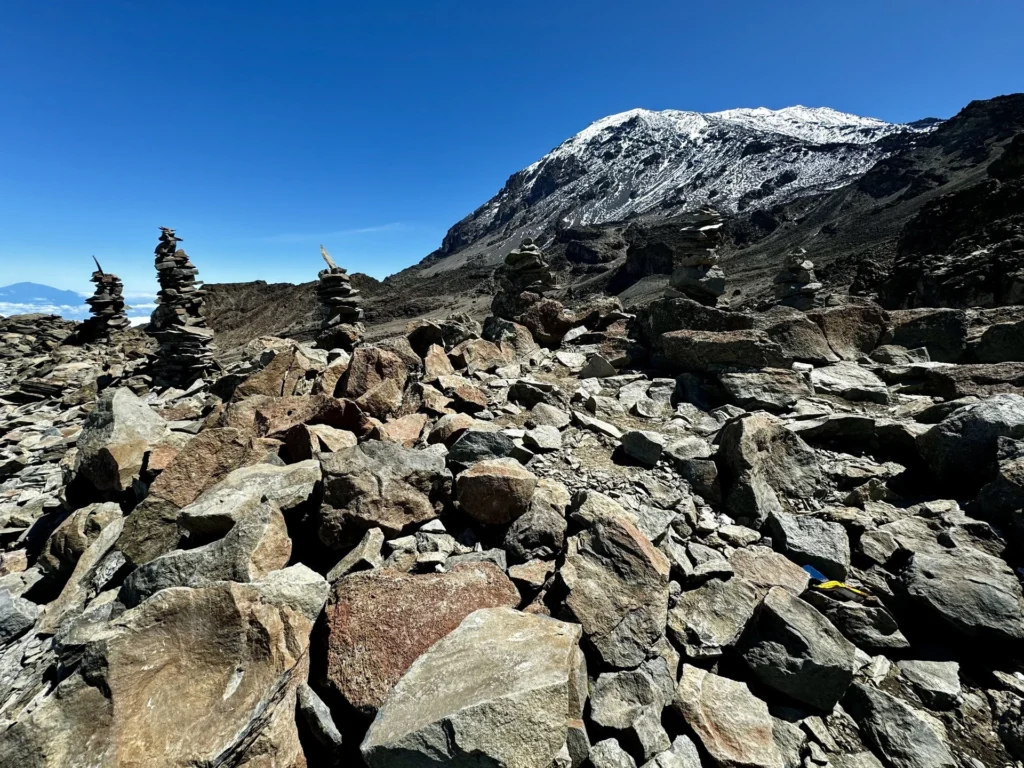
It rises alone, unmistakable. Snow-capped. Symbolic. For many, it is the beginning of trekking itself the highest point in Africa, spoken of with ambition and awe.
But those who walk Kilimanjaro slowly understand something most never say out loud.
Beyond the summit photos and altitude statistics, Kilimanjaro is a lesson in humility. The lower slopes teach patience through heat and forest. The alpine desert strips distractions away. Higher still, oxygen thins and with it, ego.
Here, as everywhere else in Tanzania, the mountain does not reward conquest.
It rewards respect.
Those who descend realize Kilimanjaro is not the destination of trekking in Tanzania. It is only one voice in a much larger conversation.
Where the Land Grows Older Than You
Away from famous peaks, the forests grow quieter and older.
In the Usambara Mountains, mist clings to ridgelines like memory. Trails pass through villages, tea fields, and ancient forests where biodiversity thrives unseen. Every step feels personal, almost intimate.
In Udzungwa, the land feels primordial. Waterfalls thunder out of sight. Roots sprawl openly across the trail. The forest does not perform for visitors. It exists entirely on its own terms.
Here, trekking becomes elemental.
The body tires honestly. Muscles burn. Sweat cools on skin. Pauses grow longer, not from weakness, but from awareness. Hands brush bark and stone, grounding the walker in something far older than intention.
The mountain has taken the noise away.
The Moment No One Prepares You For
There is always a moment though no guidebook describes it.
It may arrive near a summit, or halfway there. It may come quietly, without warning. Suddenly, the trekker stops trying to reach something and begins simply to stand.
Wind moves softly through trees or grass. The land stretches outward in layers ridges, valleys, shadows dissolving into distance. There is no urge to speak. No desire to document.
This is not victory.
It is clarity.
No photograph can carry this moment home. No words can explain it to someone who hasn’t walked slowly enough to earn it.
The Descent That Changes Everything
The way down feels different.
The trail is familiar now. The forest feels closer, less distant. Even fatigue carries a strange satisfaction. The guide says little he doesn’t need to.
The mountain has already spoken.
As villages reappear below and everyday sounds return, the trekker realizes something subtle but profound has shifted. The body returns tired, yes but steadied. The mind quieter.
Final Thought: What the Mountains Never Say Out Loud
In Tanzania, the mountains never ask who you are or where you come from.
They do not care how many treks you have done before, how expensive your gear is, or what you plan to prove.
They only respond to how you walk.
Rush them, and they will exhaust you.
Respect them, and they will empty you of noise, of hurry, of the versions of yourself you no longer need.
That is the quiet truth about trekking in Tanzania.
You may arrive chasing a summit, a view, or a story to tell later.
But if you walk slowly enough, listen carefully enough, the mountains will give you something far rarer:
A way back to yourself without ever saying a word.
