The Moment You Start Planning Changes Everything
The best time to visit Tanzania for safari and Great Migration is during the dry season from June to October, when wildlife gathers around water sources and river crossings unfold in northern Serengeti National Park.
But that answer is only half the story.
Because Tanzania doesn’t operate on a single “best month.” It moves in rhythms rainfall patterns shift, herds reposition, predator activity intensifies, and landscapes transform.
From the vast plains of the Serengeti to the wildlife-rich floor of Ngorongoro Crater and the elephant corridors of Tarangire National Park, timing influences everything.
Understanding that timing is what separates a well-timed safari from a truly strategic one.
Tanzania Safari Seasons Explained
Dry Season (June – October): Peak Wildlife & Migration Drama
If you’re researching the best time to visit Tanzania for safari and Great Migration, this is the window most travelers focus on.
Why?
- Minimal rainfall
- Thinner vegetation
- Wildlife concentrates around water
- Cooler daytime temperatures
- High predator visibility
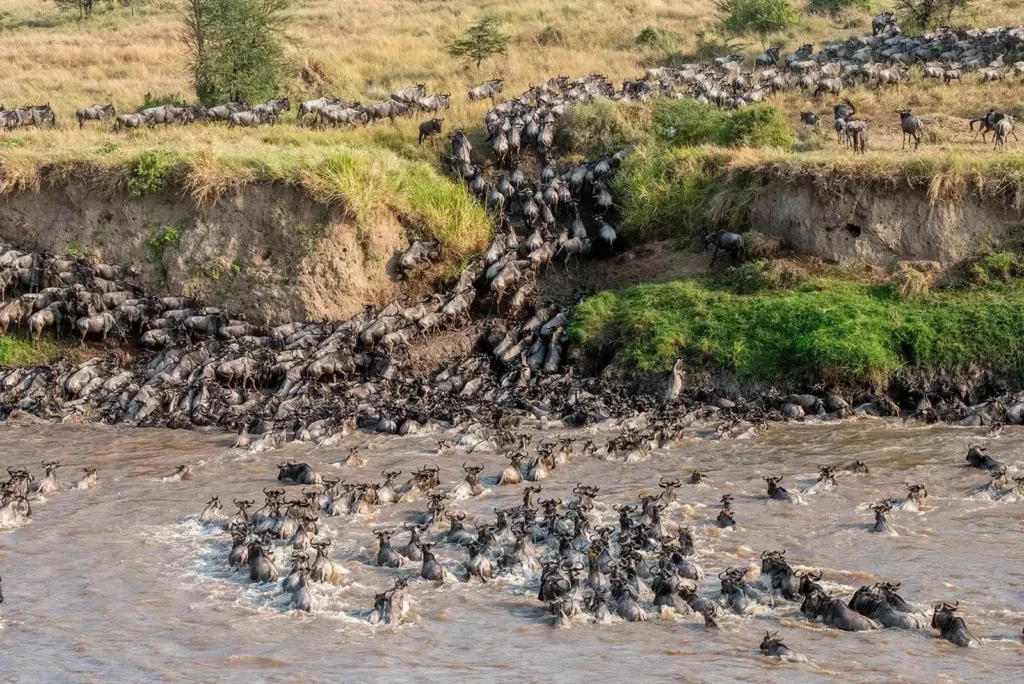
Between July and September, river crossings in northern Serengeti often reach peak intensity.
However, this is also high season:
- Camps book months in advance
- Vehicle density increases
- Pricing reaches premium levels
For first-time safari travelers, this period offers consistency and spectacle.
Green Season (November – March): Calving & Renewal
January and February bring calving season in southern Serengeti.
Thousands of wildebeest are born within a short window. Predators follow closely, creating frequent and dynamic wildlife encounters.
Advantages of this period:
- Fewer vehicles
- More flexible availability
- Lush landscapes
- Excellent photography contrast
The migration is still active just positioned differently within the ecosystem.
Long Rains (April – May): Solitude & Value
April and May bring heavier rainfall.
Some camps temporarily close, and road conditions can vary. Yet this period offers:
- Significantly reduced crowds
- Lower accommodation rates
- Dramatic storm-lit skies
It is not peak migration drama but it offers atmosphere and space.
Tanzania Safari Conditions: Month-by-Month Overview
| Month | Wildlife Activity | Migration Location | Crowd Level | Pricing Trend | Experience Style |
|---|---|---|---|---|---|
| January | Very High (Calving) | Southern Serengeti | Moderate | Medium | Predator-focused |
| February | Very High | Southern Serengeti | Moderate | Medium | Intense wildlife action |
| March | Moderate–High | Moving West | Low–Moderate | Medium | Balanced |
| April | Moderate | Central Serengeti | Low | Low | Quiet & budget-friendly |
| May | Moderate | Central/Western | Very Low | Low | Solitude |
| June | High | Moving North | Increasing | High | Early dry season |
| July | Very High | Northern Serengeti | High | High | River crossing window |
| August | Very High | Northern Serengeti | Very High | High | Peak migration |
| September | High | Northern Serengeti | High | High | Strong wildlife |
| October | High | North/Central | Moderate | High | Slightly fewer vehicles |
| November | Moderate | Moving South | Low | Medium | Scenic |
| December | High | Southern Serengeti | High (Holidays) | High | Festive peak |
So… When Is Actually the Right Time to Go?
Is July the only real “best time” for safari in Tanzania?
Not necessarily.
July to September in northern Serengeti is famous for river crossings dramatic, chaotic, unforgettable.
But it is also the busiest period.
If you want guaranteed migration intensity and don’t mind shared sightings, this window delivers.
If you value space and slower encounters, other months may align better.
What if I want intense wildlife without peak congestion?
January and February during calving season in southern Serengeti offer concentrated predator-prey interaction with fewer vehicles compared to mid-year peak.
Different drama.
Less pressure.
Is dry season always superior for photography?
Dry season offers golden light, dust atmospheres, and easier visibility.
Green season offers contrast emerald plains, dramatic skies, and clearer air after rainfall.
Your creative goal determines your timing.
What happens if I travel during April or May?
You exchange peak spectacle for quiet immersion.
Rainfall increases, yes.
But parks feel expansive and unhurried.
For experienced travelers, this can feel more personal.
So what truly determines the best time to visit Tanzania for safari and Great Migration?
Three factors:
- Migration positioning within the Serengeti ecosystem
- Your tolerance for crowd density
- The type of emotional experience you want
Spectacle.
Intimacy.
Value.
Photography.
Exclusivity.
Each season delivers differently.
When Is High Season in Tanzania?
High season typically runs:
- June through October
- Late December through early January
During this period, early booking is essential especially for camps positioned near migration corridors.
Timing matters. But positioning matters even more.
Final Reflections
There is no universal “perfect month.”
There is only alignment.
Alignment between rainfall and movement.
Alignment between wildlife density and expectation.
Alignment between your travel goals and Tanzania’s seasonal rhythm.
The migration never stops it circulates.
The landscape never disappears it transforms.
Wildlife never vanishes it redistributes.
The best time to visit Tanzania for safari and Great Migration is the moment your expectations meet the right ecosystem at the right phase of movement.
That is when a safari shifts from being a trip…
to becoming an experience that stays with you long after you leave the plains.
